
Making Wilsonville Finances Easy to Understand for All
September 10, 2026 Update: At tonight’s City Council meeting, I appreciated the City Manager’s follow-up on the Staff Financial Review proposed during this year’s Budget Committee meetings. This is an important step forward in how we monitor and manage the City’s finances. Rather than waiting for the annual budget process, Staff and Council are taking a more proactive approach than previous councils by reviewing our financial position at a six-month interval. This will allow us to identify trends, challenges, and opportunities early and adjust before issues become more significant as we move forward.
One of the most important responsibilities of local government is managing public tax dollars wisely — and making sure residents can clearly see how those dollars are being managed.
Wilsonville already produces award-winning and extensive financial reports, budgets, audits, and other information. The challenge isn’t a lack of data. The challenge is turning that information into something residents can easily find, understand, and follow over time.
That's why I would like to explore the development of a City Financial Dashboard—a simple, accessible tool that consolidates key financial information into one place and provides residents with a clear picture of the City's financial health.I initially shared this idea at the May 2026 Budget Committee meeting:
Sam sharing the idea of WIlsonville Financial Dashboard at the May 2026 Budget Committee meeting.
Below are snapshots from just such a dashboard from the City of Upland, CA.
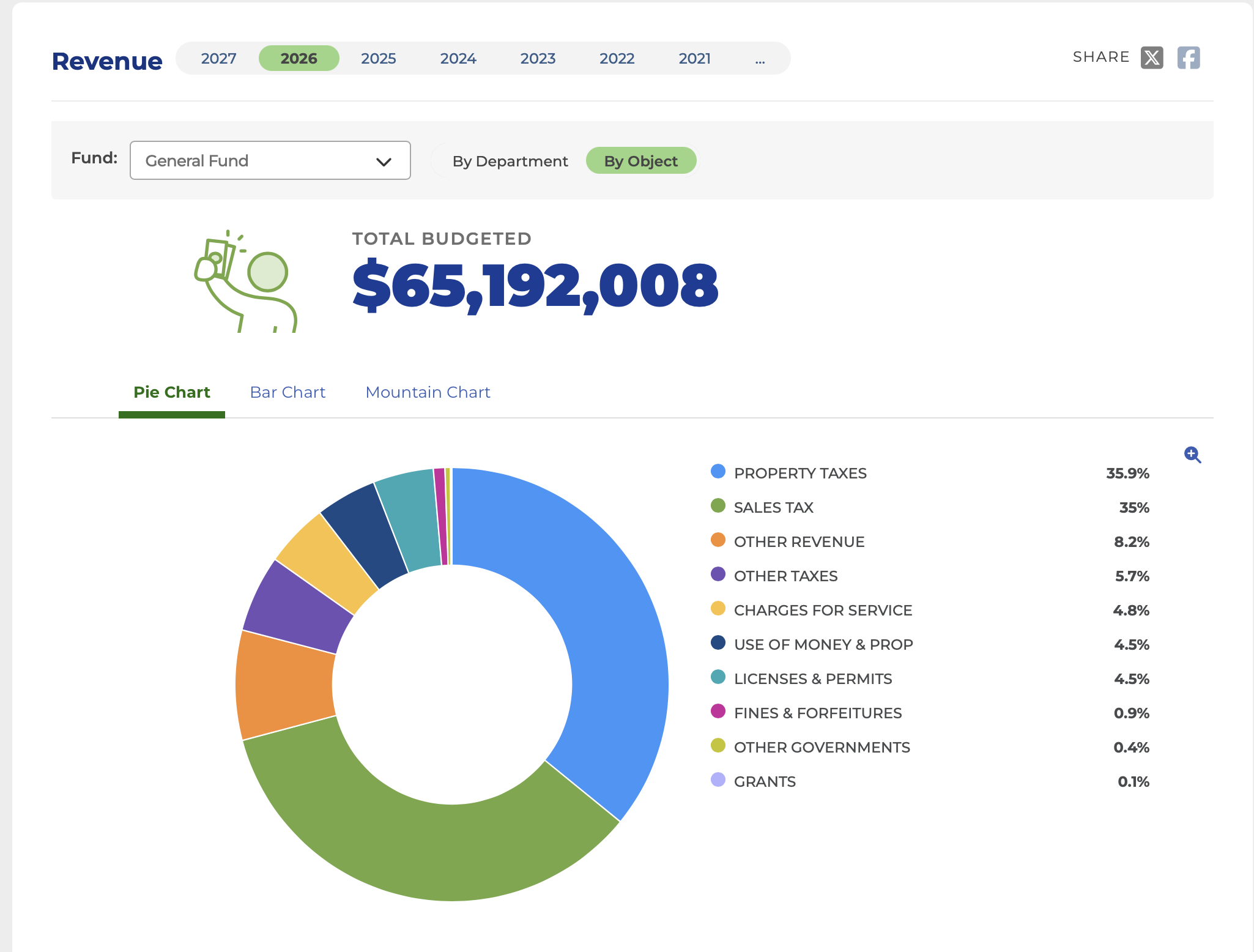
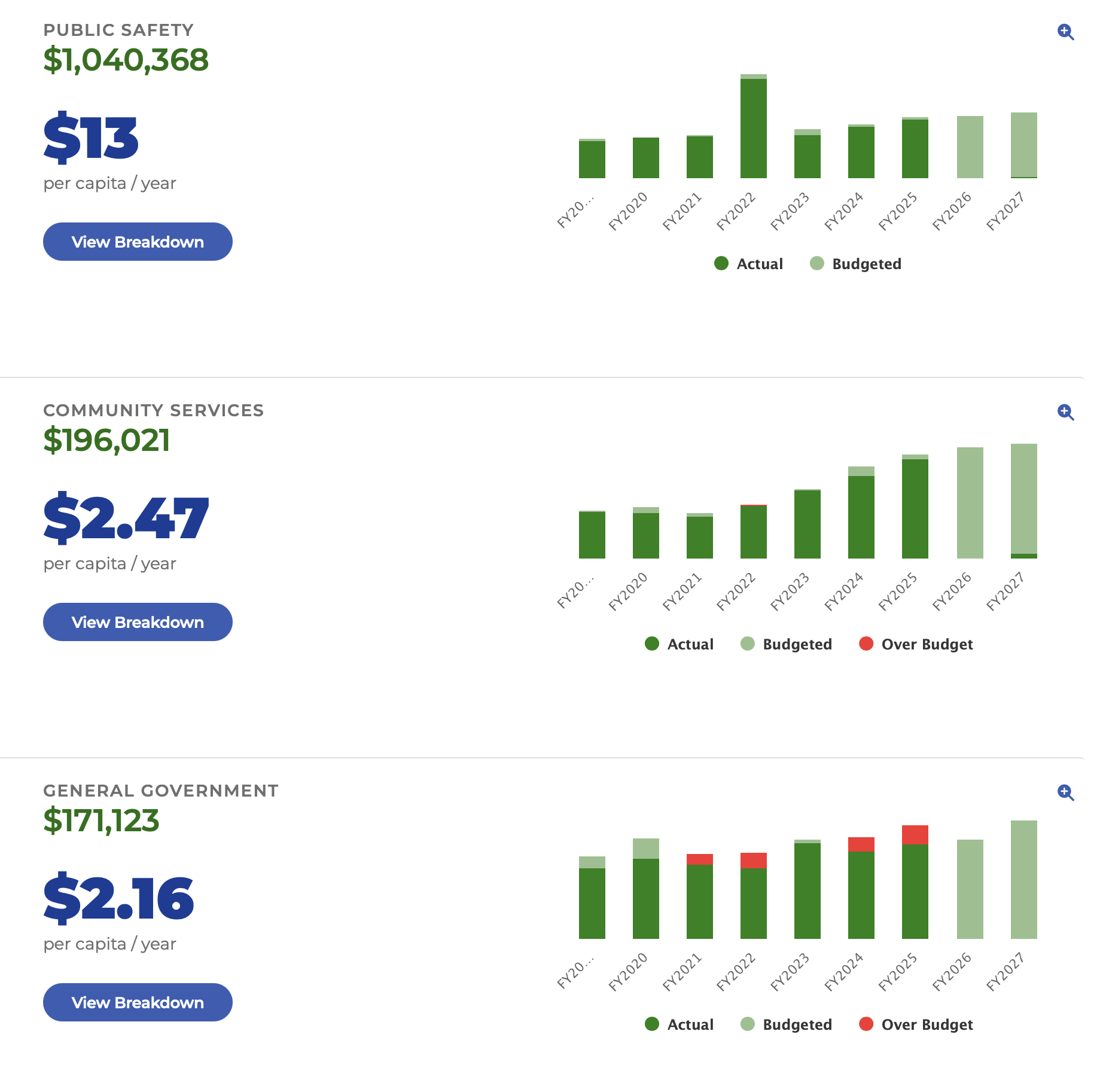
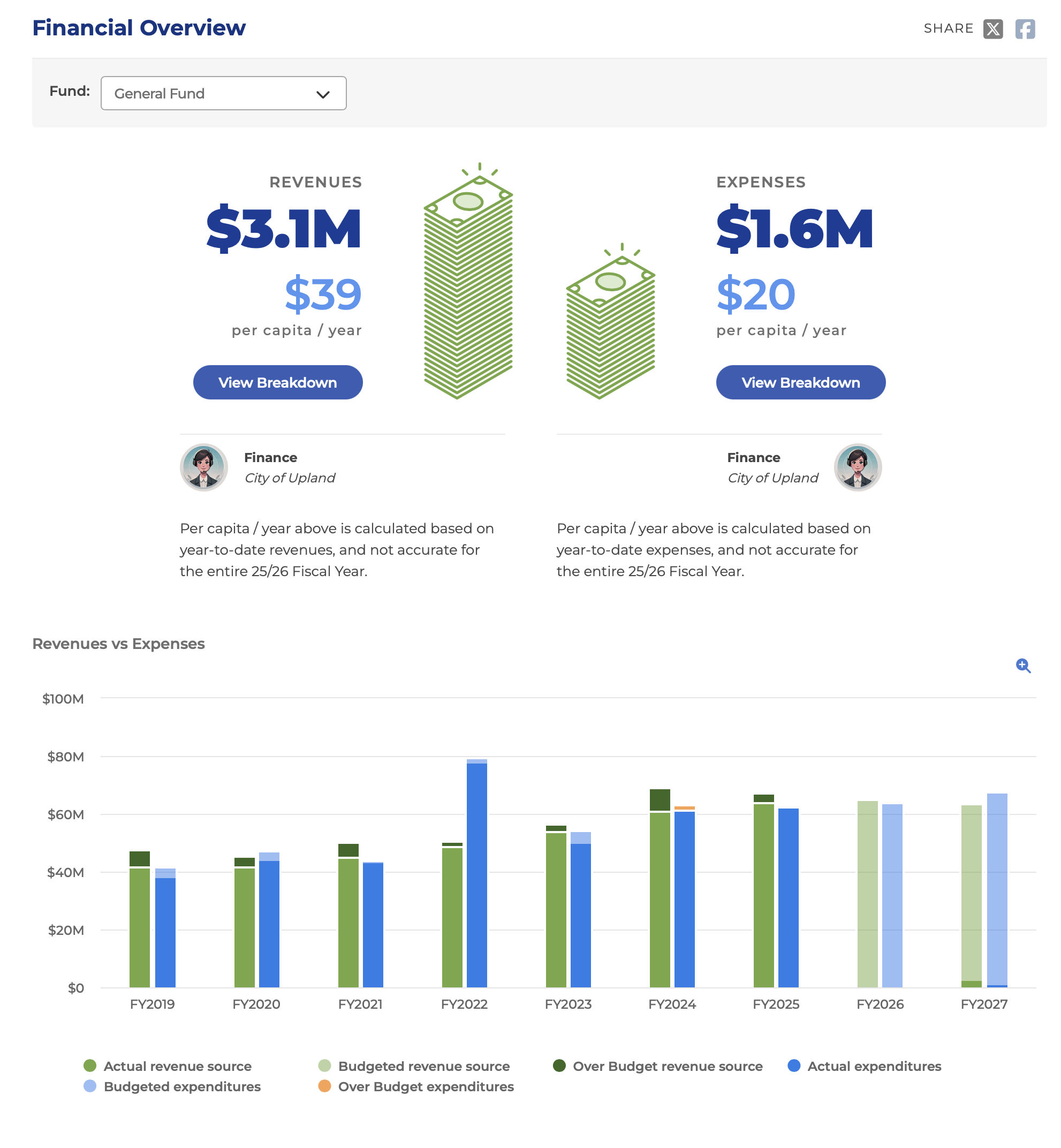
Let me start by being clear about what I am proposing. A City Financial Dashboard would not replace, modify, or compete with the City's existing robust budget process, financial reports, or annual audits. Wilsonville already has a comprehensive budget process, along with regular public financial reporting and annual audits that provide the foundation for responsible financial management. The City also has a deep-dive analysis underway to better understand and address the longer-term cost budgetary challenges we may face in the years ahead. We can expect a report on that later this year from our city staff.
A City Financial Dashboard would complement those efforts—not replace them—this would be a transparency enhancement, thus making key financial information easier for residents to access and understand throughout the year.
The idea is straightforward: take financial information the City already collects and present the most important measures in an easy-to-understand format. The dashboard could track information on a monthly, quarterly, and annual basis, including revenues and expenditures, performance against the adopted budget, major fund balances and reserves, capital project spending, debt obligations, and other indicators of the City’s overall financial position. Simple charts and trend lines could show where we stand today, how we compare with budget, and how our financial position is changing over time.
This would not replace the City’s existing financial reports, annual budget, audits, or the detailed work performed by our Finance Department. Those remain essential. Instead, the dashboard would serve as a clear front door to the City’s financial information — providing residents with the big picture while allowing those who want greater detail to access the underlying reports.
The benefits are clear: greater transparency, accountability, and continuity. Residents should not need a background in municipal finance to understand the basic financial condition of their city. Comparing budgeted amounts with actual revenues and expenditures can help the Council, Staff, and community identify trends and ask better questions. Following the same metrics over several years can also help us see whether expenses are growing faster than revenues, reserves remain healthy, and major projects are staying within their financial plans.
“Residents should not need a background in municipal finance to understand the basic financial condition of their city.”
Just as importantly, better financial information can lead to better community conversations. Whether we are discussing infrastructure, transportation, parks, public safety, affordability, or future growth, nearly every major decision has a financial component. An intuitive and familiar dashboard can help residents better understand the choices, priorities, and tradeoffs involved.
I believe good government should make important information easier for residents to understand. The goal is not more financial reporting. It is better financial understanding. A clear and consistent financial dashboard can strengthen transparency, encourage informed community participation, and help ensure today’s decisions keep Wilsonville financially strong for the years ahead.
What do you think of this idea? Email or call (503) 487-2941 and let’s talk.